Category: BLOG
-

15 Claude Prompts to Kickstart Better Design Thinking
AI can accelerate execution, but the real advantage shows up earlier—in how clearly a problem is understood and structured. When you use Claude during the thinking phase—before wireframes, before flows—you get better direction, fewer iterations, and stronger alignment across teams. This guide expands on 15 prompts you can use to drive that clarity, along with…
-
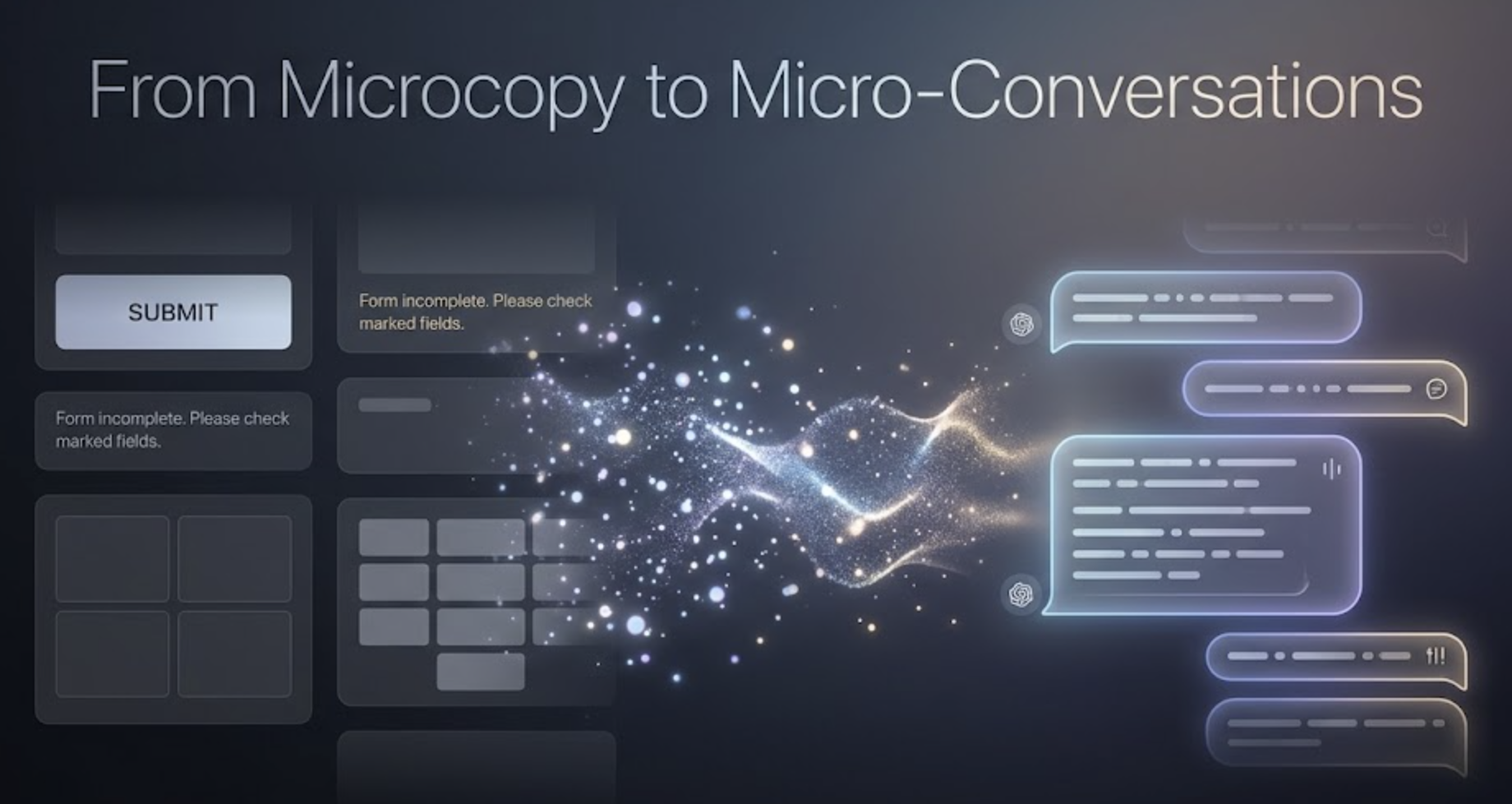
Beyond Microcopy: Designing Micro-Conversations in AI Products
Why static UX writing is evolving into adaptive dialogue systems For decades, UX writing has lived in a familiar paradigm: static, carefully crafted strings placed into predefined interface states. Buttons, error messages, empty states, confirmations—each word meticulously tuned, but fundamentally fixed. That model is breaking. As AI-native products become more common, we are moving from…
-

The Trust Stack UX Model: Designing Confidence in AI Systems
If onboarding is about trust, and AI UX is about uncertainty, then we need a structure that explains how trust is built progressively inside intelligent systems. This is that framework. 🧱 The Trust Stack UX Model A 4-layer model for designing trust in AI-first products: 1. Clarity Layer (What is happening?) “Do I understand what…
-

From Flows to Systems: Why Linear UX Is Obsolete in AI Products
From linear journeys → probabilistic, state-based, conversational systems There was a time when “user flows” were the backbone of product design. We drew neat boxes.We connected arrows.We defined happy paths, edge cases, and funnels. It worked—because products were deterministic. A button led to a screen.A screen led to a result.A user moved forward in a…
-
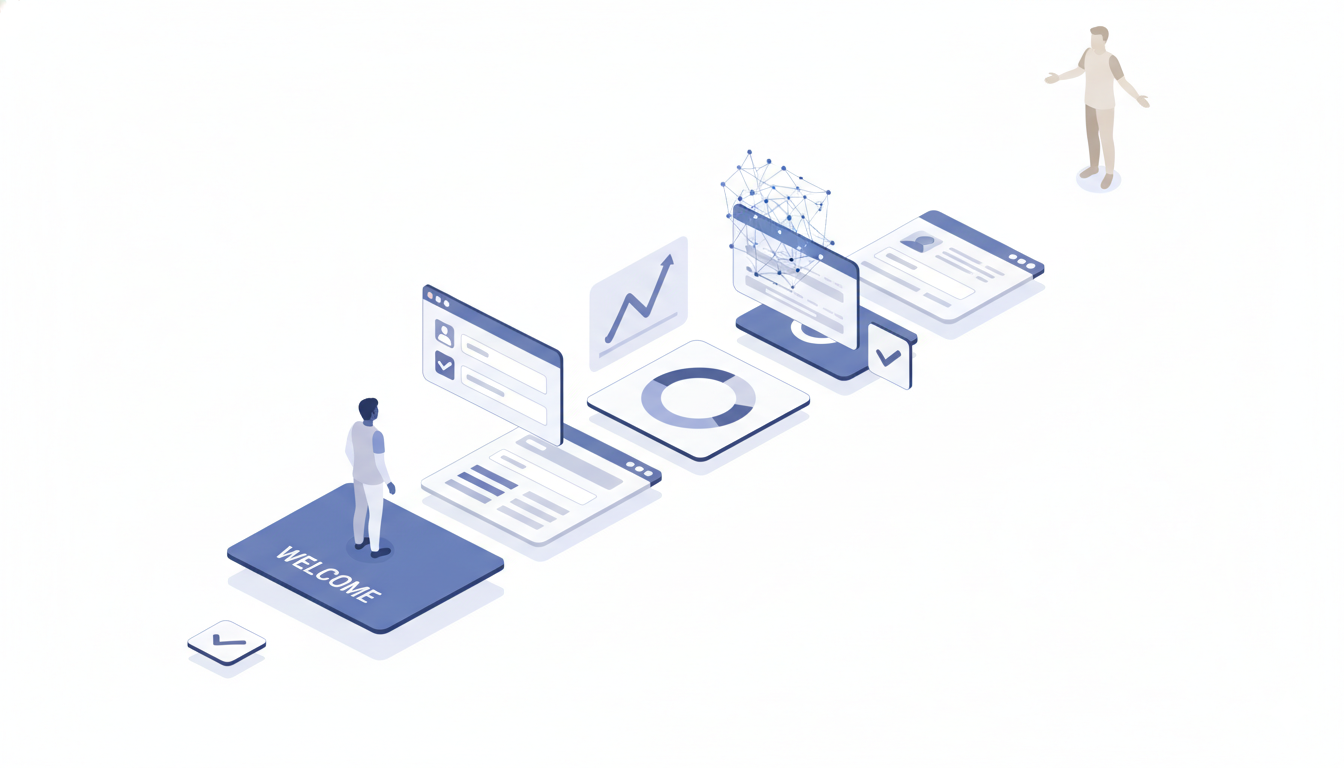
Designing Onboarding Systems, Not Screens: A Perspective
When I first approached onboarding in a self-serve accounting product, I made a mistake I see many teams still make: I treated onboarding as a flow. A sequence of screens.A funnel to optimize.A drop-off problem to fix. It took a failed rollout—and a noticeable dip in activation—to realize that onboarding in fintech is not a…
-

ChatGPT is a Designer’s Secret Weapon – Here’s How to Use It for AI-First Design!
Introduction The rise of AI-first design is transforming how digital products are conceptualized, developed, and optimized. Designers and product teams are leveraging artificial intelligence (AI) to streamline workflows, enhance user experiences, and personalize interactions. ChatGPT, with its natural language processing capabilities, has emerged as a powerful tool in this AI-driven design approach. From user research…
-

AI-First Design Trends in 2025
Introduction As artificial intelligence (AI) continues to evolve, it is becoming an integral part of digital design and user experience (UX). In 2025, AI-first design is no longer a futuristic concept but a standard approach to creating seamless, personalized, and highly efficient digital experiences. This shift is driven by advancements in machine learning, natural language…
-

Understanding the Difference Between Information Architecture and Navigation
Introduction The digital landscape has evolved significantly, leading to an increased focus on user experience (UX) design. Two critical aspects of UX design are Information Architecture (IA) and Navigation. While these terms are often used interchangeably, they refer to different yet complementary elements of a website or application’s design. Understanding the differences between IA and…
-

Revolutionizing user experience: Personalization at scale with AI
In today’s digital era, user experience (UX) personalization has become a cornerstone of successful online businesses. By tailoring interactions to individual preferences and behaviors, companies can enhance engagement, drive conversions, and foster long-term customer loyalty. With the advent of artificial intelligence (AI) technologies, businesses now have unprecedented opportunities to personalize user experiences at scale. This…